
Understanding Galveston’s Oyster Season
Galveston, Texas has long been recognized as one of the premier oyster destinations along the Gulf Coast. The region’s unique combination of coastal waters, nutrient-rich bays, and traditional harvesting practices creates an ideal environment for cultivating some of the finest oysters in North America. Understanding the nuances of Galveston’s oyster season is essential for both culinary enthusiasts and seafood professionals seeking to source the freshest catch.
Peak Oyster Season Timeline
The traditional oyster season in Galveston typically runs from September through April, aligning with cooler water temperatures that enhance flavor and quality. During these months, oysters develop optimal meat quality and possess the ideal mineral content that defines their distinctive taste profile. The peak season, particularly from November through February, offers the most abundant supply and the most robust flavor characteristics.
Monthly Availability Guide
- September to October: Season opening with moderate availability as water temperatures begin to cool
- November to January: Peak season with maximum availability and superior flavor intensity
- February to April: Late season offerings as water temperatures gradually warm
- May to August: Off-season period when harvesting is minimal or restricted
Selecting Fresh Galveston Oysters
Identifying fresh, high-quality oysters requires attention to several key indicators. Fresh Galveston oysters should exhibit tightly closed shells with no cracks or damage. The shells typically display a mix of gray and brown coloring with characteristic ridged patterns unique to Gulf Coast varieties. When purchasing oysters, verify that they have been harvested recently and stored at proper temperatures between 35 and 40 degrees Fahrenheit.
Quality Indicators to Assess
- Shell integrity with no breaks, cracks, or substantial damage
- Minimal odor, with a clean, briny ocean scent
- Proper moisture levels indicating recent harvesting
- Consistent sizing appropriate for your intended preparation method
- Documentation of harvest date and source location
Sourcing and Purchasing Guide
Galveston oysters are available through multiple channels, each offering distinct advantages. Direct sourcing from local oyster farms and processing facilities ensures the freshest product and supports regional aquaculture businesses. These establishments often provide detailed information about harvesting practices and water quality standards that exceed regulatory requirements.
Reliable Sourcing Options
Local seafood markets in the Galveston area maintain close relationships with oyster harvesters, often receiving daily deliveries during peak season. These retailers can provide specific information about the exact bay or water zone where your oysters were harvested, allowing for informed selection based on flavor preferences. Coastal restaurants frequently work directly with suppliers and may sell fresh oysters to customers who inquire.
Online seafood delivery services have expanded access to Galveston oysters for customers beyond the immediate coastal region. These services maintain strict cold chain logistics to ensure products arrive in optimal condition. When ordering online, verify that vendors provide recent harvest documentation and utilize expedited shipping methods.
Flavor Profiles and Varieties
Galveston oysters exhibit distinctive flavor characteristics influenced by the specific bays and water conditions where they develop. Oysters from different water zones within Galveston Bay display varying salinity levels, which directly impacts their taste profile. Some areas produce briny, mineral-forward oysters, while other zones yield slightly sweeter varieties with creamy textures.
The Gulf Coast water environment imparts a unique combination of metallic and sweet notes that distinguishes Galveston oysters from Atlantic varieties. Seasonal variations also influence flavor intensity, with winter oysters typically displaying more robust mineral characteristics than early-season offerings.
Proper Storage and Handling
Maintaining oyster freshness after purchase requires adherence to specific storage protocols. Oysters should be stored in the coldest section of your refrigerator, ideally between 35 and 40 degrees Fahrenheit. Place them cup-side down on a bed of ice, ensuring the ice does not make direct contact with the shells, which would dilute the precious interior liquid.
Properly stored oysters can maintain their quality for up to two weeks, though consumption within three to five days of purchase yields optimal flavor and texture. Never store oysters in fresh water, as this will kill them and compromise their quality. Before preparation, discard any oysters with broken shells or those that have opened and do not close when tapped.
Preparation Methods for Fresh Oysters
Galveston oysters lend themselves to multiple preparation techniques that highlight their natural qualities. Raw oysters on the half shell represent the most traditional presentation, requiring only careful shucking and minimal accompaniments to allow the oyster’s flavor to predominate.
Popular Preparation Approaches
- Raw on Half Shell: Served chilled with lemon and mignonette sauce to enhance natural brine flavor
- Grilled or Broiled: Topped with butter, garlic, and herbs for a warm preparation that softens texture
- Oyster Stew: A traditional preparation using cream, butter, and selective seasonings to create a luxurious dish
- Fried Oysters: Breaded and deep-fried for a textural contrast that complements the creamy interior
- Roasted: Baked with various toppings including cheese, breadcrumbs, and bacon for enhanced depth
Sustainable Harvesting Practices
Galveston’s oyster industry operates within strict regulatory frameworks designed to protect water quality and ensure long-term sustainability. Harvesters must comply with Texas Parks and Wildlife Department guidelines that monitor salinity levels, bacterial content, and overall bay health.
Related Posts
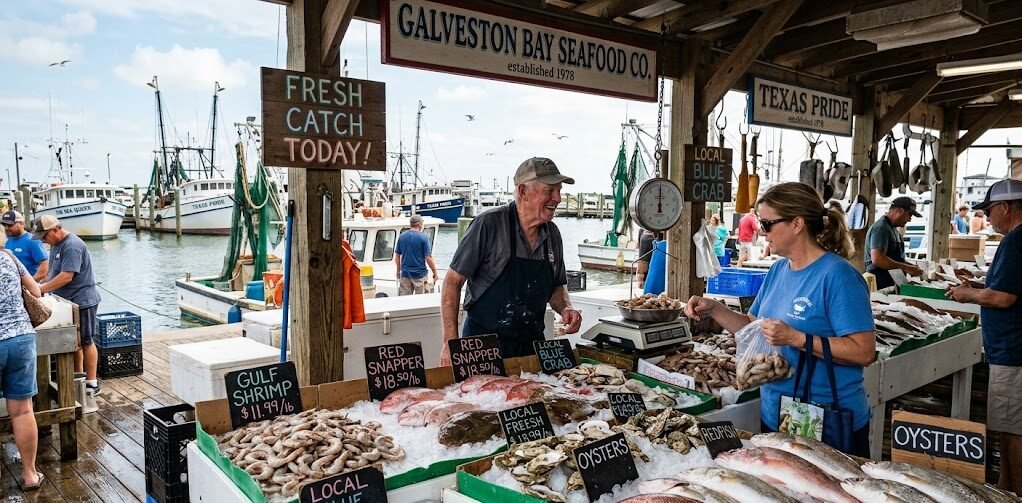
Best Seafood Markets in Galveston: Where Locals Buy Fresh Catch
Galveston, Texas, renowned for its coastal charm and maritime heritage,…

The Complete Galveston Food Trucks Guide: Tacos & Seafood
The unmistakable aroma of sizzling shrimp and smoked brisket wafts…
Gulf to Table: Fresh Catch Restaurants
The Gulf to Table concept represents a growing culinary movement…